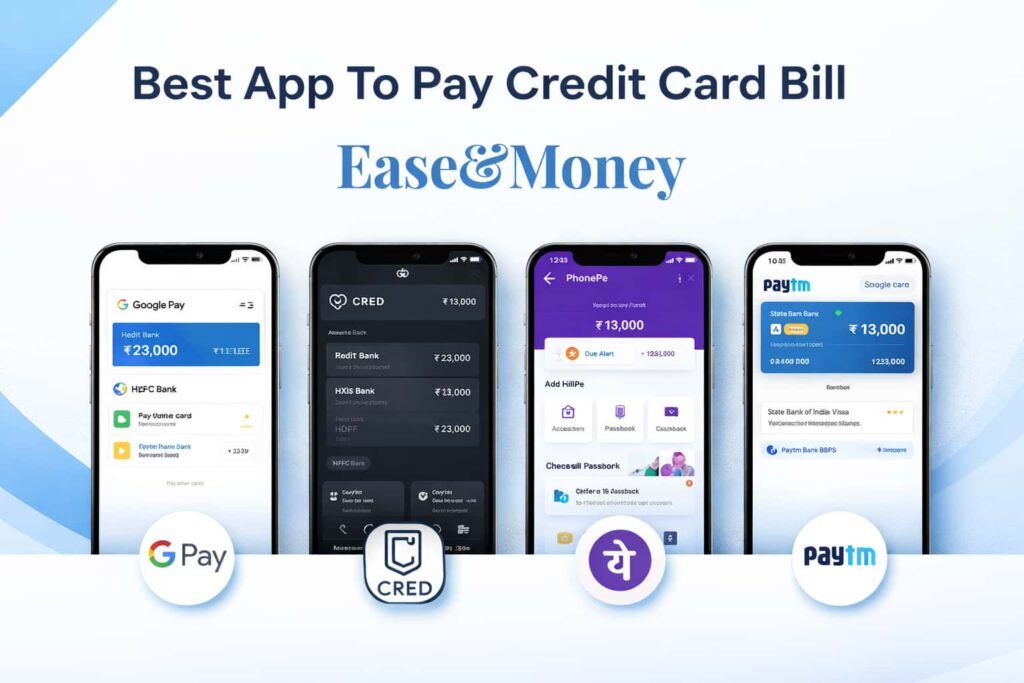
Credit card usage in India has changed a lot in the last few years. just 5 year back, people mostly used cards for travel booking or big purchases only. Now it has become an everyday payment — groceries, online shopping, OTT subscriptions, EMI conversion, and even loading UPI wallets.
According to recent TOI media reports, by late 2025, the share of UPI-linked credit card transactions went close to about 40% (it was around 28% in early FY25 and then quickly increased). So many users are now tapping phone and paying through UPI, but the amount finally goes to the credit card bill later, that’s where confusion in repayment starts for many people.
Because of this, the main problem is not overspending anymore. The real headache is managing repayment. Many users now keep 2–3 credit cards, each with a different billing date and due date. On top of that, every bank has its own app, so your phone is full of banking apps and notifications. Sometimes people simply get confused and miss a payment even though money is available.
So what many users start searching for is not another card, but an easier way to track and pay everything in one place — basically, they look for the best app to pay credit card bills and manage all cards together.
Market Analysis: Banking Apps vs Third-party Credit Card Payment Apps
There are almost 115 million credit card holders in India. As of early 2026, most credit card bill payments in India are happening online only. And an interesting thing, many users now prefer third-party apps instead of the bank’s own mobile app just for paying the bill.
As per RBI data and Industry trends, roughly 65–70% users pay through apps like CRED, PhonePe or Google Pay. But only around 30–35% people use the bank app. Reason is simple — people want everything in one place. Today, one person may have 2–3 credit cards from different banks, so opening separate bank apps every month becomes tiring.
Apps like CRED handle big-value payments (high-spending users), and UPI apps like PhonePe and Google Pay already sit in the phone for daily payments, so users naturally pay the credit card bill there also. Bank apps are still used, but mostly for checking statements or limits, not always for payment.
Why do people choose third-party apps?
| Point | Third-Party Apps | Bank Apps |
|---|---|---|
| Rewards | Cashback, coins, small offers | Usually no rewards |
| Convenience | All cards in one app | One bank at a time |
| Process | One-click payment | More steps sometimes |
| Usage | Daily payments + bill pay together | Mostly account checking |
Also, almost all payments now go through the BBPS system, so technically payment still reaches the bank safely — just the interface is different.
What changed in behavior
Earlier, people trusted only the bank app for everything. Now behaviour is different — loans & deposits → bank but frequent payments → fintech apps
So the shift is not about a trust issue. It’s about convenience and reminders. These fintech apps are now offering rewards, discounts, and games to earn cashback.
Top 7 Best Credit Card Payment Apps to Pay Bills in 2026
The “best” app for paying credit card bills in India really depends on what you want — fast settlement, rewards, or just simple use. In 2026, most good apps now focus on instant confirmation through the Bharat Connect (BBPS) system and some extra rewards or cashback, so users feel both safe and beneficial while paying the bill. Let’s find what the number one list is. This list is random, and the results come from the safety, reliability, and user counts.
Choosing the right app honestly depends on what you want — rewards, safety, or just no-tension payment. All seven can pay your bill, but each behaves differently in real use.
Quick Comparison
| @ | App | Best For | Reward Type | Payment Speed | Fees (Approx) |
|---|---|---|---|---|---|
| 1 | CRED | Premium card users | Coins, brand offers | Real-time (≈1 min) | Free via UPI |
| 2 | Google Pay | Simple & safe payments | Small vouchers/cashback | Instant | ₹0 |
| 3 | Amazon Pay | Cashback users | Direct Pay Balance cashback | Same-day | Usually free |
| 4 | CheQ | Fixed reward seekers | ~1% Chips value | Instant–72 hrs | Free UPI |
| 5 | BillDesk | Direct bank payment | None | Real-time verification | Bank dependent |
| 6 | Paytm | Reminders & autopay | Scratch cards/points | Instant | Small fee sometimes |
| 7 | PhonePe | Reliable everyday use | Small cashback cards | Instant | Small fee in some cases |
1. CRED
In 2026, apps like Google Pay, Paytm and PhonePe are still the most used for normal UPI payments. But when it comes to credit card bill payments by value, CRED is still leading. All of them are secure and operate under NPCI payment guidelines.
CRED is a bit different — it is focused only on credit card users. The app usually prefers customers with a good credit profile and a higher CIBIL score, so some users with a lower score may not get approved. Because of that, the total number of users is lower, but the average spending per user is higher.
That’s why CRED often ranks number one in credit card bill payment value. It works not just like a payment app, but more like a credit card management platform, built mainly for disciplined and trusted borrowers.
1. Market Dominance (The Numbers)
CRED became popular mainly because of scale. Business Today Media reports that in 2024–25, it was handling roughly ₹15,000 crore credit card bill payments every month, almost one-third of the total payment value in India. Because so many high-value users pay through it, banks keep their connection with CRED very stable and fast.
2. Why Many Users Call it “Best”
- The 750+ Club = CRED generally accepts users with a high CIBIL score, so its community is more premium. Due to this, it partners with brands like luxury hotels, electronics and lifestyle companies that normal UPI apps usually don’t offer.
- Smart Statement Check = Its “Protect” feature reads your card statement and points out late fees, extra charges or duplicate payments. Many users discover hidden charges only through this.
- Fast Settlement = Through Bharat Connect (BBPS network), most payments reflect to the bank within minutes, so people feel safer before the due date.
- All Cards in One View = If you hold cards from multiple banks, you can see all dues and upcoming dates in one dashboard. This reduces missed payments — a very common problem.
3. Rewards System
Instead of small scratch cards, it gives CRED Coins — roughly 1 coin per ₹1 paid. Coins can be used for discounts in the CRED Store or travel/hotel offers, which is why heavy spenders like it.
4. Charges
Many apps have started adding small convenience fees on some bill payments, but generally, CRED keeps UPI credit-card bill payments free for members.
5. Quick Comparison
| Feature | CRED | PhonePe / Google Pay |
|---|---|---|
| Main Purpose | Credit card management | General payments |
| Due-date tracking | Detailed | Basic reminders |
| Hidden fee detection | Yes | No |
| Rewards type | Premium offers OR coins | Small cashback |
| Eligibility | Usually high CIBIL needed | Anyone can use |
Tip – If you have a good credit score and multiple cards, CRED helps in tracking and management. If you just want easy payment and occasional cashback, normal UPI apps are enough.
2. Google Pay (GPay)
Google Pay works for many people because it is already their daily UPI app. Instead of installing a new platform, users simply add their credit card and pay the bill from the same place. Simple, fast and familiar.
Why users prefer it
- Tokenised security — real card number never shared
- AI fraud checks (around 21% better scam detection)
- Multiple card reminders, no missed due dates
- Free payments via UPI (no platform fee)
- “Flex” digital credit line usable directly on UPI
- Quick small rewards, sometimes ₹100 first bill
| Reward Type | Typical Benefit |
|---|---|
| First payment | ~₹100 reward |
| Repeat payments | Up to ~₹600 total |
| Utility cards | Up to 5% cashback (select cards) |
| Flex Stars | 1 Star ≈ ₹1 usable quickly |
Unlike premium apps, almost anyone can use it easily.
3. Paytm (Another App for credit card payments)
Paytm comes in the list mainly because it acts like a credit card control panel, not just a payment button. Many users who keep 2–4 cards prefer it since everything shows in one place — bill generated, the due date, and the alerts.
Why do people use Paytm
- UPI AutoPay: you can set auto-debit, so bill pays automatically and late fee chances reduce
- Multiple cards tracking in one dashboard
- Free CIBIL score check inside the app
- Supports almost all networks (Visa, RuPay, Mastercard, even Amex)
- If UPI fails, you can switch to a debit card or netbanking instantly
| Benefit | Typical Example |
|---|---|
| First bill offer | Up to ₹100 cashback |
| ₹5,000+ payment | Scratch cards / reward points |
| Alerts | Bill generated & due reminders |
Unlike simple UPI apps, Paytm is useful for people who forget due dates and want backup payment options in one app.
4. CheQ
CheQ is basically the closest alternative to CRED, but its focus is different. Instead of premium lifestyle rewards, CheQ tries to give direct money value back when you pay your credit card bill. That’s why many users who feel scratch cards are useless prefer it.
Main reasons people use CheQ
- Flat ~1% reward (“CheQ Chips”) on almost every bill payment
- You can pay multiple card bills together in one transaction
- Rewards can be converted to vouchers or even a bank transfer cash
- Works even if your CIBIL is average (no strict 750 requirement)
- AI tool suggests which card to use for maximum benefit
| Feature | Practical Insight |
|---|---|
| Settlement speed | ~2 minutes for major cards |
| Fees | No platform charge via UPI |
| Users | ~30 lakh+ by early 2026 |
| Reward limit | Up to 10,000 Chips/month |
Unlike random cashback apps, CheQ is chosen by users who want predictable rewards, not luck-based offers.
5. Amazon Pay — Why It’s in the Top Credit Card Bill Payment Apps
Yes, Amazon Pay is known mainly for UPI, but many users now use it for credit card bills because of direct cashback and trust factor. People already shop on Amazon, so paying the bill inside the same app feels safer and simpler.
Why does it make the list
- Direct cashback in Amazon Pay Balance (real money, not coins)
- Strong for Amazon Pay ICICI card users
- Automatic bill fetch + reminders (HDFC, SBI, Axis etc.)
- Usually no convenience fee periods
- High-trust platform for bigger payments
| Feature | Practical Example |
|---|---|
| Cashback | Up to ~2% (Prime users), ~1% others |
| Settlement | Same-day reflection normally |
| UPI offer | Small ₹2–₹10 rewards on ₹500+ |
| Limit | Up to ₹2,00,000 per payment |
Unlike reward-game apps, Amazon Pay suits users who want simple payment and real cashback directly usable for shopping or bills.
6. PhonePe
PhonePe comes in the list mainly because of scale and reliability. Even if rewards are small, many users trust it since they already use PhonePe daily for UPI.
Recent data (2025–26)
- As per economictimes.indiatimes.com, around 9.8 billion UPI transactions in Dec 2025 alone.
- Nearly 45–48% UPI market share
- About 9.3 crore bill payments every month
- Over 65 crore registered users in India
So even if the average bill is small (~₹3,000), the number of payments is huge — that’s why banks keep strong integration with PhonePe.
Why do people use it
- Instant BBPS (Bharat Connect) settlement confirmation
- Voice/AI search — you can type “pay my card bill”
- Biometric payment (fingerprint/Face ID)
- Auto-pay reminders so the due date is not missed
| Practical Benefit | What it Means |
|---|---|
| Recurring payments | No late fee risk |
| Security | Fast biometric payments |
| Compatibility | Works with almost every bank |
Unlike CRED (premium) or CheQ (rewards), PhonePe is chosen for dependability and ease, especially for first-time or family users.
7. Bill Desk (Bank-Based)
BillDesk is different from apps like CRED or PhonePe. It is not really a consumer app — it is the payment backbone working behind many bank websites. When you pay a credit card bill from net-banking (especially from another bank account), many times that page you see is actually BillDesk.
Why it matters
- Used by major banks (SBI, HDFC, ICICI, etc.) for third-party card payments
- Handles nearly 50–60% of online bill payments in India
- Processes billions of transactions yearly
- Very trusted and stable during heavy traffic
| Feature | Practical Meaning |
|---|---|
| No app needed | Pay directly from the browser |
| Security | Bank-level encryption |
| Payment options | Net-banking, debit card, UPI |
| Reliability | Works even during peak due dates |
Unlike reward apps, BillDesk is chosen for safety and dependability, especially for large payments.
Billing Cycle, Due Date & Posting Date — Why People Get Late Fee
Every credit card runs on about a 30-day billing cycle. After the statement generates, the bank gives around 18–22 days grace period. If full amount reaches the bank in that time, no interest is charged.
But three dates exist, and this is where confusion starts:
- Statement Date — bill created
- Due Date — last day bank accepts payment
- Posting Date — day bank actually receives & records payment
Banks care about the posting date. But, Apps only show the payment time.
Real Example
You pay ₹24,350 at 10:45 PM on 18 March (due date). App shows “success” immediately. Bank posts payment on 19 March → system marks late. That’s why app choice matters more than people think.
How Credit Card Payment Apps Actually Work
The app does not keep your money. It only triggers the transfer:
Your Bank → UPI / BBPS network → Card issuing bank → Card account ledger
Two main systems are used:
- UPI (Unified Payments Interface) =Direct bank-to-bank debit started by you. Usually fastest.
- BBPS (Bharat Bill Payment System) = Standard bill payment route where the card acts like a registered biller.
Why Some Apps Feel Faster –
- Direct UPI routing → near-instant posting
- Wallet/batch settlement → delayed posting
So two apps may both say “paid”, but bank posting time can differ — and that difference decides whether you pay interest or not.
See offers I’m likely to pre-qualify for 📉 No credit / Low CIBIL
Start building my credit score
FAQs
Which app is actually better than CRED?
If your CIBIL is below ~750, CheQ or Amazon Pay usually feels better. They don’t restrict entry and still give cashback value. CRED works best mainly for high-score heavy spenders.
Which UPI app is safest for credit card bill payment?
Google Pay and PhonePe are considered safest for normal users because payments go directly bank-to-bank through BBPS/UPI. Less delay risk, and settlement usually reflects same day or next morning.
Which app gives the highest cashback on credit card bill payment?
CheQ gives predictable value (around 1% style rewards). Amazon Pay sometimes gives 1–2% usable cashback. Scratch-card apps like Paytm or PhonePe give smaller but occasional lucky rewards instead.
Why did I still get late fee even after paying on due date?
Because bank checks posting date, not payment time. If you paid 11 PM on due date, bank may receive next day. Always pay 1 day earlier to stay safe.
Is CRED approved by RBI?
CRED itself is not a bank, but payments run through regulated systems like UPI and BBPS. So transaction is RBI-regulated indirectly. App is only interface, money still goes bank-to-bank.
Which app is best for multiple credit cards?
For tracking many cards, CRED and Paytm are easier because they show all due dates together. People with 3–5 cards prefer reminder dashboards to avoid accidental missed payment penalties.
What is the most rewarding real way to pay credit card bill?
Realistically, paying slightly early is biggest reward — you avoid 3% monthly interest and ₹750+ late fee. Cashback ₹50 matters less compared to penalty you prevented.